The current carrying capacity of a copper busbar (ampacity) is the maximum electrical current that a copper busbar can safely carry without overheating or failure, which is an important parameter for electrical panel and power distribution design. Following ANSI C119.2 and IEC 60364 standards ensures that current carrying capacity of copper busbar meet industrial safety requirements, avoiding the risk of fire or equipment damage. This guide outlines the calculation method, key influencing factors, and compliance checks current carrying capacity of copper busbar to help engineers make accurate decisions.
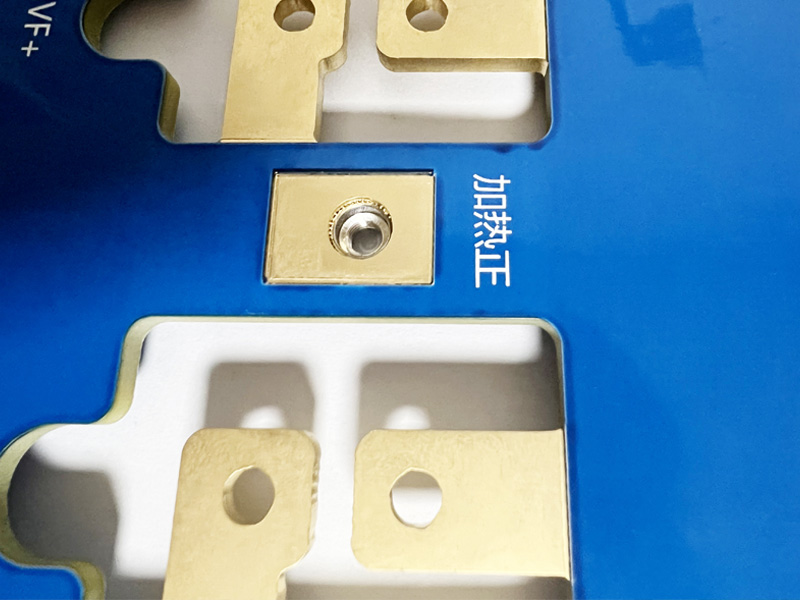
What is the Current Carrying Capacity of Copper Busbars (Ampacity)?
The current carrying capacity of a copper busbar, also known as ampacity, refers to the maximum RMS current that a copper busbar can carry continuously under certain environmental conditions (temperature, humidity, installation space). Unlike theoretical conductivity, practical ampacity takes into account heat dissipation, material resistivity, and long-term operational stability—key to preventing overheating in high-voltage applications.
How to Calculate Current Carrying Capacity of Copper Busbar (Step-by-Step Formula)
The core formula for calculating copper busbar ampacity (according to ANSI C119.2) is:
I = (k × A × ΔT^0.5) / L
– I = Current carrying capacity (amps)
– k = Material constant (5.7 for pure copper)
– A = Cross-sectional area (mm²)
– ΔT = Allowable temperature rise (°C, usually 30-60°C)
– L = Busbar length (meters)
This formula prioritizes real-world heat dissipation, not just theoretical conductivity. For a 10x100mm (1000mm²) copper busbar, the basic ampacity is 2500A at approximately 40°C—adjust for installation (air vs. closed) by ±15%.
Key Factors Affecting Copper Busbar Ampacity
Temperature (Ambient & Operating)
The ambient temperature has a direct impact current carrying capacity of copper busbar: every 10°C increase above 40°C reduces ampacity by 8-10%. For example, a copper busbar rated at 2000A at 40°C only carries 1800A at 50°C. The operating temperature (of the internal resistance) must remain below 90°C to avoid material degradation.
Busbar Size & Installation Method
- Thicker busbars (≥10mm) have 20% higher ampacity than thin busbars (≤5mm) of the same width, due to better heat dissipation.
- Installation in open air increases ampacity by 15% compared to closed panels (common in switchgear).
Comparison of Copper Busbar Current Ratings (Based on Material/Thickness)
| Copper Busbar Specifications | Cross-section (mm²) | Ampacity at 40°C (A) | Ampacity at 50°C (A) |
|---|---|---|---|
| Pure Copper 5x50mm | 250 | 800 | 720 |
| Pure Copper 10x100mm | 1000 | 2500 | 2250 |
| Tinned Copper 10x100mm | 1000 | 2450 | 2205 |
The tinned copper busbar has a slightly lower position current carrying capacity of copper busbar (2-3%) but better corrosion resistance—ideal for outdoor applications.
ANSI vs IEC: Differences in Copper Busbar Ampacity Standards
ANSI C119.2 (US standard) uses an ambient temperature of 30°C as a basis, while IEC 60364 (EU standard) uses 40°C. This means a 10x100mm copper busbar rated at 2600A per ANSI is only 2500A per IEC. Always align with regional standards to ensure that current carrying capacity of copper busbar compliance.
Common Mistakes in Copper Busbar Ampacity Calculations
- Ignoring ambient temperature: Using a 40°C rating for high temperature environments (e.g. industrial plants) creates a 10-15% risk of overload.
- Ignoring installation method: Sealed panels require a 15% reduction in ampacity.
- Using theoretical conductivity instead of practical ampacity: Causes inaccurate measurements and safety hazards.
FAQ: Current Carrying Capacity of Copper Busbars (Answered by Engineers)
Q1: What is the maximum current that a 10x100mm copper busbar can carry?
Pure copper busbar measuring 10x100mm has the maximum value current carrying capacity of copper busbar 2500A at 40°C (open air installation). For closed panels, drop to 2125A; at 50°C, reduce to 2250A.
Q2: How to adjust ampacity for high temperature environment?
Use a temperature correction factor: For every 5°C above 40°C, multiply the base ampacity by 0.95. For an ambient temperature of 60°C, correction factor = 0.85 (2500A × 0.85 = 2125A).
Q3: Does plating affect the current capacity of copper busbars?
Non-conductive coatings (e.g. epoxy) reduce heat dissipation, lowering current carrying capacity of copper busbar by 5-8%. Conductive coatings (e.g. tin plating) have minimal impact (≤3%).
Q4: What is the safety margin for copper busbar ampacity?
Industry best practice is a 15-20% safety margin: If your system requires 2000A, choose copper busbars rated for 2400A current carrying capacity of copper busbar to account for voltage fluctuations and temperature spikes.
Q5: How to verify copper busbar ampacity compliance?
Use thermal imaging to check operating temperature (must be <90°C) and cross-verify with ANSI/IEC calculation formula. Third-party testing (as per UL 857) further validates compliance.
How to Choose the Right Copper Busbar for Your Ampacity Needs
- Calculate the required ampacity (including safety margin).
- Adjust to ambient temperature and installation method.
- Aligned with regional standards (ANSI/IEC).
- Select material (pure/tinned copper) based on application environment.
Our engineering team provides free current carrying capacity of copper busbar Calculation support to ensure optimal size.
Our Copper Busbar Solutions for Reliable Current Carrying Capacity
We produce high purity copper busbars (copper content 99.99%) with precision current carrying capacity of copper busbar ratings, in accordance with ANSI and IEC standards. Whether you require a custom size (5x50mm to 20x200mm) or a tinned/epoxy coated option, our products meet your ampacity needs.
If you need reliable current carrying capacity of copper busbar solution for your electrical project, order with us today. Contact our sales team via email: sales@bestpcbs.com.
Tags: 10x100mm copper busbar ampacity, ANSI IEC copper busbar standards, Bus Bar PCB, Busbar PCB, busbar pcb design, copper busbar, copper busbar ampacity, copper busbar ampacity compliance, copper busbar current carrying capacity, copper busbar current rating calculation, copper busbar manufacturers, copper busbar PCB, copper busbar safety margin, copper busbar size ampacity, copper busbar pcb, temperature affects copper busbar ampacity, busbar tinned copper dexterity
This entry was posted on Friday, January 23, 2026 at 18:19 and is filed under best PCB, best PCB, Design Guide, FAQ. You can follow any responses to this entry via the RSS 2.0 feed. You can skip to the end and leave a response. Ping is currently not allowed.
News
Berita Teknologi
Berita Olahraga
Sports news
sports
Motivation
football prediction
technology
Berita Technologi
Berita Terkini
Tempat Wisata
News Flash
Football
Gaming
Game News
Gamers
Jasa Artikel
Jasa Backlink
Agen234
Agen234
Agen234
Resep
Download Film
Gaming center adalah sebuah tempat atau fasilitas yang menyediakan berbagai perangkat dan layanan untuk bermain video game, baik di PC, konsol, maupun mesin arcade. Gaming center ini bisa dikunjungi oleh siapa saja yang ingin bermain game secara individu atau bersama teman-teman. Beberapa gaming center juga sering digunakan sebagai lokasi turnamen game atau esports.
Comments are closed, but trackbacks and pingbacks are open.