Reliability in aerospace PCB assembly determines whether a system performs as expected after leaving a controlled environment and entering real-world conditions.
At this point, performance is no longer theoretical; it is proven under pressure, time, and environmental exposure.
A single PCB error rarely goes unpunished. This can impact data accuracy, system timing, and operational continuity across interconnected systems.
In aerospace applications, reliability is not just a design goal; These are requirements that must be met in every condition that the system will face.
Failure Is Not an Option in Aerospace Applications
Failures in aerospace PCB assembly create system-level risks because the electronics operate as part of a tightly integrated architecture. Each board supports a specific role in an avionics, navigation, or communications system.
When a PCB is damaged, the impact extends beyond the component. Signal delays impact timing throughout the system, incorrect data processing impacts automatic responses, and loss of communications creates operational uncertainty.
Redundancy exists, but it is often misunderstood. It is designed to handle rare events, not compensate for avoidable defects during assembly. In practice, many problems traced in service stem from latent errors that were not detected during production.
High-reliability PCB manufacturing reduces this risk at the source, ensuring the board performs consistently when exposed to real operational loads.
PCBs Must Perform in Extreme Conditions
Aerospace PCB assembly must maintain performance in environmental conditions that actively degrade materials and interconnects over time.
Key challenges include:
- Extreme temperatures – thermal cycling causes expansion mismatches, stresses solder joints, and weakens joints
- Mechanical vibration and shock – continuous movement accelerates fatigue in components and interconnections
- Altitude and pressure variations – changes affect dielectric behavior and electrical stability
- Humidity and contamination – ingress increases the risk of corrosion and long-term degradation
This condition rarely causes immediate failure. Instead, they cause small defects that develop over time. Reliability depends on controlling these risks during design and assembly, before they emerge in service, where remediation is much more complex and expensive.
Reliability Supports Passenger and Crew Safety
Reliable aerospace electronics directly support safe system behavior in all phases of operations. Flight control, navigation feedback, and monitoring systems all depend on stable, predictable PCB performance.
Degradation at the board level affects the accuracy of the system. Incorrect sensor data or delayed signal transmission can affect pilot decisions or automatic control responses. In safety-critical environments, even small inconsistencies can escalate into operational risks.
Reliability is not determined by component selection alone. This reflects the consistency of the assembly processes, inspection standards and validation methods used to ensure each board performs as expected under all conditions.
Component Failure Can Cause Costly Downtime
Component failures in aerospace systems have operational and financial consequences, often representing the most disruptive point in the life cycle.
Common impacts include:
- The plane was grounded while the error was investigated
- Flight delays and cancellations
- Emergency maintenance with increased costs and reduced planning control
- Reputation impact where reliability becomes visible to customers
Failures occur more often during operation than during testing, where the diagnosis is more complex. In many cases, the root of the problem stems from the quality of the assembly or the behavior of the material under stress.
Investing in reliability early on will reduce the likelihood of these disruptions, where the costs of failure far outweigh the costs of prevention.
Strict Industry Standards Demand Proven Reliability
Aerospace electronics standards set the foundation for quality, consistency and traceability, but are often misinterpreted as guarantees of reliability.
Key frameworks include:
- IPC-A-610 for assembly acceptance
- IPC Class 3 for high-performance electronic devices that are very important for life
- AS9100 for aerospace quality management systems
- ISO 9001 for structured production processes
These standards enforce process discipline and repeatability. However, compliance alone does not eliminate risk. Reliability depends on how strictly these standards are applied, particularly in material control, process consistency and depth of inspection.
Long Life Requires Durable Assembly Quality
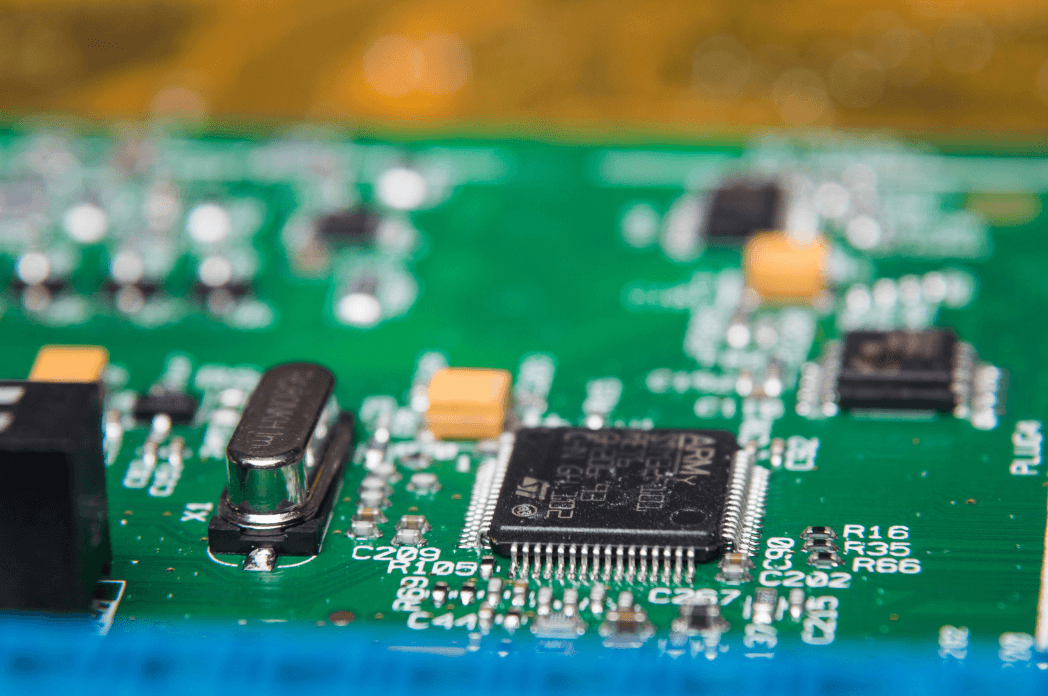
Aerospace PCB assemblies must maintain performance over extended service intervals, often with limited access for repair or replacement.
Material selection plays an important role. High-grade laminates are resistant to thermal degradation, while suitable solder alloys maintain joint integrity over repeated cycles. The quality of the assembly determines the performance of this material over time.
Design also influences long-term reliability. Stack decisions affect signal integrity and thermal distribution, which can be further explored in this regard A guide to understanding PCB layers. In applications that require limited movement or installation, flexible PCBs offer durability where rigid boards can create stress points.
Durability is not achieved through design alone. It depends on how well those design decisions are implemented during assembly.
Traceability Helps Maintain Aerospace Reliability
Traceability provides the visibility needed to manage risk and maintain accountability throughout aerospace PCB assembly.
A structured approach usually includes:
- Component verification – confirm authenticity and conformity to specifications
- Batch and lot tracking – record the origin of materials in each building
- Recording process – capture assembly parameters and operator input
- Inspection records – document test results at each stage
- Memory ability – isolate affected units if problems arise
This level of control allows for quicker identification of errors and more targeted corrective action. It also supports continuous improvement by linking performance results back to specific materials or processes.
Testing and Inspection Protects Product Integrity
Testing and inspection validate the quality of PCB assembly before deployment, identifying defects that may not be visible during production.
Common methods include:
- Automated Optical Inspection (AOI) for surface defects
- X-ray inspection for hidden solder joint problems and cavities
- In-circuit testing for component-level electrical verification
- Functional testing for real-world system behavior
Each method addresses different risk areas. Combined, they provide a more complete picture of assembly quality, reducing the chance of errors reaching the operational environment.
Trusted PCB Assembly Reduces Risk Across the Supply Chain
Supplier capabilities have a direct impact on reliability outcomes across an aerospace program. Differences in process control, material sourcing, and inspection standards are often only visible under operational pressures.
In practice, many reliability problems stem from minor inconsistencies during assembly. This is difficult to detect early, but expensive to overcome later. Working with an experienced PCB assembly partner helps reduce this exposure through controlled processes and consistent quality standards.
At Altimex, the focus is on combining process discipline with engineering understanding, ensuring that reliability is built into every stage of production rather than checked at the end.
If you review your current approach, contact us as your first choice to assess risk and improve long-term performance.
The post Why is Reliability So Important in Aerospace PCB Assembly? appeared first on Altimex.
PakarPBN
A Private Blog Network (PBN) is a collection of websites that are controlled by a single individual or organization and used primarily to build backlinks to a “money site” in order to influence its ranking in search engines such as Google. The core idea behind a PBN is based on the importance of backlinks in Google’s ranking algorithm. Since Google views backlinks as signals of authority and trust, some website owners attempt to artificially create these signals through a controlled network of sites.
In a typical PBN setup, the owner acquires expired or aged domains that already have existing authority, backlinks, and history. These domains are rebuilt with new content and hosted separately, often using different IP addresses, hosting providers, themes, and ownership details to make them appear unrelated. Within the content published on these sites, links are strategically placed that point to the main website the owner wants to rank higher. By doing this, the owner attempts to pass link equity (also known as “link juice”) from the PBN sites to the target website.
The purpose of a PBN is to give the impression that the target website is naturally earning links from multiple independent sources. If done effectively, this can temporarily improve keyword rankings, increase organic visibility, and drive more traffic from search results.
Comments are closed, but trackbacks and pingbacks are open.